
Installing cloakroom taps might sound like a job best left to a plumber, but if you’re fairly handy and willing to take your time, it’s absolutely doable. Cloakrooms are usually small spaces, so a tidy installation makes a big difference—not only for how the tap works, but also for how clean and “finished” the whole basin area looks.
This guide walks you through the process in a clear, human way, with practical tips to help you avoid common mistakes. It’s written to be SEO-friendly while still feeling like something you’d genuinely use when you’re standing there with tools in hand.
Why Correct Installation of Cloakroom Taps Matters
Because cloakroom basins are compact, everything sits closer together—meaning any small leak, awkward angle, or poor alignment becomes noticeable fast. A proper installation helps you:
Keep water flow neat and controlled, reduce splashing, prevent drips and leaks under the basin, protect your vanity unit or pedestal area from water damage, and make cleaning easier day to day.
Done right, cloakroom taps should feel solid, sit straight, and operate smoothly without wobbling.
Tools and Materials You’ll Typically Need
Before you start, it helps to have everything ready so you’re not scrambling halfway through.
Most installations for cloakroom taps require:
Adjustable spanner or basin wrench (very helpful in tight spaces)
Screwdriver (flathead and/or Phillips)
PTFE tape (for threaded connections where needed)
Silicone sealant (optional, depending on basin and tap base)
A cloth or towel (for drying and protecting surfaces)
Bucket or shallow tray (for any leftover water)
New flexible tap connectors (often included with the tap, but not always)
Isolation valves (recommended if you don’t already have them)
If your plumbing is older, you might also need a pipe cutter or additional fittings, but most modern cloakroom setups use flexible hoses that make life much easier.
Step 1: Turn Off the Water Supply
This is the part you do not want to skip.
If you have isolation valves
Look underneath the basin. If there are small valves on the hot and cold supply pipes, turn them clockwise to shut off water to the tap.
If you don’t have isolation valves
You’ll need to turn off the main stopcock for cold water and (if applicable) the hot water supply depending on your system.
Once off, open the existing taps to drain any remaining water. Keep a towel and bucket ready—there’s almost always a bit left in the pipes.
Step 2: Remove the Old Tap (If Replacing)
If you’re swapping an old tap for new cloakroom taps, removal is usually the fiddliest part because space is limited under a cloakroom basin.
Here’s what to do:
Place a towel and bucket under the connections.
Undo the flexible connectors or pipe connections from the water supply.
Locate the tap fixing nut underneath the basin (usually a large nut or horseshoe bracket).
Use a basin wrench if access is tight.
Once loosened, lift the old tap out from above.
If the nut is seized with age, a little penetrating oil and patience usually beats forcing it.
Step 3: Clean and Prep the Tap Hole Area
This step is what separates a rushed job from a proper one.
Clean away:
Old silicone
Limescale
Grime around the tap hole
A clean surface helps your new tap sit flush, keeps it straighter, and improves the seal (especially important in cloakrooms where splashes are more common due to smaller basins).
Step 4: Fit the Tap to the Basin
Most cloakroom taps come as either:
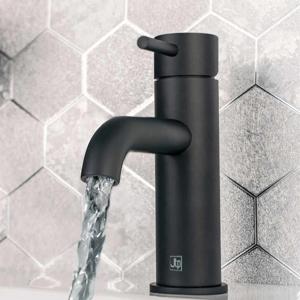
Monobloc taps (one tap body, often a single lever)
Pillar taps (separate hot and cold)
For monobloc cloakroom taps
Feed the flexible tails through the tap hole.
Make sure the rubber gasket (if included) is positioned correctly under the base.
From underneath, fit the washer and fixing nut/bracket.
Align the tap straight from above, then tighten underneath.
For pillar cloakroom taps
Fit each tap through its own hole.
Tighten each fixing nut gradually, checking alignment as you go.
Don’t over-tighten. It’s tempting, especially if you don’t want wobble, but over-tightening can crack ceramic basins or distort washers.
Step 5: Connect the Water Supplies
This is where you want to be careful and methodical.
Connect the flexible tap tails to the hot and cold supply valves.
Hand-tighten first to avoid cross-threading.
Then tighten gently with a spanner—firm, but not aggressive.
Should you use PTFE tape?
You usually don’t need PTFE tape on flexible hose connections if they have rubber washers (most do). PTFE is more suitable for metal threaded joints without washers. If you’re unsure, check the fitting type—forcing PTFE where it isn’t needed can actually create leaks.
Step 6: Turn the Water Back On Slowly and Check for Leaks
Now the moment of truth.
Turn isolation valves back on slowly (or the main stopcock).
Watch the connections under the basin carefully.
Run the tap and check both hot and cold settings.
What to look for
Drips from the flexible hose joints
Moisture around the tap base
Water collecting in the cabinet or on the floor beneath
If you spot a leak, turn the water back off and re-seat the connection. Often, it just needs a gentle re-tighten or the washer needs to sit correctly.
Step 7: Seal Around the Base (If Needed)
Some cloakroom taps come with a base gasket that seals well without silicone. Others benefit from a thin bead of sanitary silicone around the base, particularly if the basin surface isn’t perfectly flat.
If you choose to silicone:
Use a very small bead
Smooth it neatly
Wipe away excess straight away
In a cloakroom, the basin often gets splashed more due to limited space, so a clean seal can help prevent water slowly working its way underneath.
Step 8: Final Checks and Finishing Touches
Before you call it done:
Open and close the tap a few times to ensure smooth operation
Check that the tap is straight and stable
Re-check for slow leaks after 10–15 minutes (some drips show up later)
Wipe everything clean and dry
If you’ve installed cloakroom taps on a vanity unit, also check inside the unit over the next day or two. A tiny leak can go unnoticed until it causes damage.
Common Mistakes to Avoid When Installing Cloakroom Taps
Even careful DIYers run into these issues:
Not turning off the water fully, mixing up hot and cold connections, cross-threading the connectors, over-tightening the fixing nut, skipping cleaning around the tap hole, and forgetting to check for slow leaks after the first test run.
If you avoid these, you’re already ahead of most rushed installations.
When It’s Best to Call a Plumber
You should consider professional help if:
Your existing pipework is old or corroded
You don’t have isolation valves and can’t easily shut off supplies
The new taps don’t match existing connections
You notice persistent leaking even after re-fitting
There’s no shame in calling a plumber for the tricky bit. Sometimes it’s a quick visit that saves hours of frustration.
Conclusion: A Proper Cloakroom Tap Installation Makes a Big Difference
Installing cloakroom taps properly isn’t just about getting water to flow. It’s about creating a neat, reliable finish that suits a small bathroom space and stands up to daily use. Take your time, keep everything aligned, don’t over-tighten, and always test for leaks properly before you tidy up.


Write a comment ...